OCD vs Anxiety: Clinical Differential Diagnosis and Neurobiological Distinction
The Anxiety Solve Editorial Collective | Updated: March 2026
Executive Summary: Differentiating Obsessive-Compulsive and Anxiety Disorders
OCD vs anxiety clinical distinctions focus on the presence of functional compulsions and the specific nature of intrusive cognitions that characterize each diagnostic category. The DSM-5-TR classifies Obsessive-Compulsive Disorder under code 300.3 and Generalized Anxiety Disorder under code 300.02 — a nosological separation reinforced by the ICD-11’s landmark decision to relocate OCD from the anxiety disorders chapter into a distinct diagnostic grouping titled Obsessive-Compulsive and Related Disorders, reflecting the accumulating evidence for neurobiologically distinct underlying mechanisms.
This reclassification has significant clinical implications that extend beyond taxonomic organization: the neurobiological, phenomenological, and treatment distinctions between OCD and primary anxiety disorders are sufficiently fundamental that misdiagnosis in either direction carries meaningful consequences for treatment selection, prognosis, and outcome. For a comprehensive review of the differential diagnosis of anxiety spectrums and the clinical overlaps between adjacent anxiety presentations, the reader is referred to the dedicated comparative analysis available on this portal.
How do clinicians distinguish OCD from Generalized Anxiety Disorder?
The most clinically decisive phenomenological distinction between OCD and Generalized Anxiety Disorder lies in the ego-syntonic versus ego-dystonic quality of the primary cognitions that characterize each condition. In OCD, obsessional thoughts are experienced as ego-dystonic — perceived by the patient as intrusive, alien, repugnant, and inconsistent with their self-concept and values — producing distress not because the patient endorses the thought content but precisely because they find it abhorrent and uncontrollable. In GAD, worry content is characteristically ego-syntonic — the patient perceives their worry as a reasonable, if excessive, response to genuine real-world concerns about health, finances, relationships, or safety — experiencing the worry as an unpleasant but subjectively justified cognitive process rather than as an alien intrusion into consciousness. This phenomenological distinction, while not absolute — some OCD presentations involve partial insight that reduces the clarity of the ego-dystonic quality — provides the primary clinical anchor for differential diagnosis and should be systematically assessed through structured clinical interview before any treatment pathway is determined.
The Neurobiological Intersection: CSTC Circuit vs. Amygdala-Centric Hyperarousal
The Cortico-Striato-Thalamo-Cortical Circuit in OCD
The neurobiological substrate of OCD is most precisely characterized by dysfunction within the Cortico-Striato-Thalamo-Cortical (CSTC) circuit — a series of parallel loops connecting the orbitofrontal cortex and anterior cingulate cortex to the striatum, globus pallidus, and thalamus, which then project back to cortical regions in closed feedback loops. Neuroimaging studies consistently demonstrate hyperactivation of the orbitofrontal cortex and caudate nucleus in OCD patients at rest and during symptom provocation, with functional connectivity analyses showing an imbalance between the direct pathway — which facilitates behavioral initiation — and the indirect pathway — which provides inhibitory regulation of repetitive behavioral output.
This CSTC hyperactivation produces the core phenomenological features of OCD at a neurobiological level: the orbitofrontal cortex generates persistent error signals that communicate to the striatum a sense of incompleteness or wrongness that cannot be resolved, driving compulsive behavioral repetition in a futile attempt to achieve a neurologically unattainable sense of completion or correctness. The thalamic component of the circuit amplifies these signals by failing to gate them adequately, producing the intrusive, repetitive quality of obsessional thought and the driven, urgent quality of compulsive behavior that are pathognomonic of the disorder.
Amygdala-Centric Hyperarousal in Primary Anxiety Disorders
In contrast to OCD’s CSTC-mediated pathology, primary anxiety disorders — including Generalized Anxiety Disorder, Social Anxiety Disorder, and Panic Disorder — are characterized by amygdala-centric hyperreactivity as the primary neurobiological maintaining mechanism. The amygdala’s role as the brain’s threat detection and fear conditioning center places it at the hub of the neural circuits that generate, maintain, and generalize anxious arousal in response to perceived threat stimuli, with downstream effects on the hypothalamic-pituitary-adrenal axis, the autonomic nervous system, and the prefrontal cortical systems responsible for top-down regulation.
The critical neurobiological distinction is directional: in OCD, the primary pathology originates in cortical-striatal dysfunction that drives compulsive behavior through a circuit that does not primarily depend on amygdala hyperreactivity, while in anxiety disorders, the primary pathology originates in amygdala hyperreactivity that drives avoidance behavior through a circuit that does not primarily involve striatal-compulsive mechanisms. This distinction explains the differential treatment responsiveness of the two conditions: serotonin reuptake inhibition at higher doses modulates CSTC circuit activity in OCD, while lower SSRI doses that primarily modulate amygdala reactivity are effective for anxiety disorders. For trauma-informed diagnostic models that examine the intersection of fear conditioning and obsessive-compulsive phenomenology, the reader is referred to the relevant analysis on this portal.
The Anterior Cingulate Cortex: A Point of Neurobiological Convergence
One area of genuine neurobiological overlap between OCD and anxiety disorders is the anterior cingulate cortex (ACC), which participates in both the CSTC circuit dysfunction of OCD and the threat monitoring hyperactivation of anxiety disorders, albeit through distinct functional roles in each condition. In OCD, the ACC contributes to the persistent error-monitoring and incompleteness signaling that drives compulsive repetition. In anxiety disorders, the ACC participates in the detection and amplification of threat signals that maintain the hypervigilance characteristic of GAD and Social Anxiety Disorder.
This convergence at the ACC level — and the serotonergic modulation that influences ACC function in both conditions — provides one neurobiological explanation for the clinical overlap in presentation and the partial responsiveness of both conditions to SSRI pharmacotherapy, while the distinct circuits downstream of ACC involvement account for the phenomenological and treatment differences that make differential diagnosis clinically essential.
Clinical Characteristics: OCD vs. GAD
| Feature | Obsessive-Compulsive Disorder (300.3 / ICD-11: 6B20) | Generalized Anxiety Disorder (300.02 / ICD-11: 6B00) |
|---|---|---|
| Thought Content | Intrusive, repetitive, ego-dystonic cognitions experienced as alien and inconsistent with the patient’s values; common themes include contamination, harm, symmetry, forbidden thoughts, and doubting | Pervasive, ego-syntonic worry about multiple real-world domains — health, finances, relationships, occupational performance — perceived as excessive but understandable responses to genuine concerns |
| Presence of Rituals | Compulsions — overt behavioral or covert mental rituals — are definitional; their function is to neutralize obsessional distress or prevent feared outcomes, even when the patient recognizes the behavioral link is irrational | Compulsions are absent as a defining feature; behavioral responses include reassurance-seeking and avoidance, but these are not driven by the ritualistic, rule-governed urgency characteristic of OCD compulsions |
| Autonomic Response | Autonomic arousal is present during obsessional activation and symptom provocation, but the primary driver of distress is the cognitive intrusion and the urge to neutralize rather than the autonomic response itself | Autonomic hyperarousal is a core and prominent feature; chronic sympathetic activation, muscle tension, sleep disturbance, and somatic complaints are primary presenting symptoms alongside the cognitive worry content |
| Target of Worry | Specific, internally generated obsessional themes that are idiosyncratic to the individual’s fear system and frequently bear no proportional relationship to objective real-world probability | Multiple external real-world domains with some correspondence to objective concerns, though the intensity and uncontrollability of the worry is disproportionate to the actual probability or impact of feared outcomes |
Phenomenological Subtypes and Their Diagnostic Implications
OCD Subtypes with Anxiety Phenotype Overlap
Several OCD subtypes present with phenomenological features that create particular diagnostic complexity in the differential with anxiety disorders. Health-related OCD — characterized by obsessional fear of having or contracting a serious illness — can be superficially indistinguishable from health anxiety (illness anxiety disorder) without careful assessment of the ego-dystonic quality of the cognitions and the presence of checking rituals that go beyond the reassurance-seeking characteristic of health anxiety.
Relationship OCD — characterized by intrusive doubts about the correctness of one’s romantic partner, the genuineness of one’s feelings, or the possibility of having acted inappropriately in relationships — can be misidentified as generalized anxiety about relationships without attention to the repetitive, doubt-driven quality of the obsessional content and the neutralizing rituals — mental review, confession, reassurance-seeking — that distinguish the OCD presentation.
Pure-O: The Misunderstood Presentation
The colloquial designation Pure-O describes OCD presentations in which overt behavioral compulsions are absent or minimal, with the compulsive component expressed primarily through covert mental rituals — mental review, mental reassurance, mental neutralization of intrusive thoughts — that are not observable to external observers. Pure-O presentations are particularly prone to misdiagnosis as GAD or depressive rumination, because the surface presentation consists of intrusive thoughts and apparent worry without the visible behavioral rituals that most clinicians associate with OCD.
The diagnostic key in Pure-O presentations is the ego-dystonic quality of the intrusive thoughts — which in OCD are experienced as repugnant and alien rather than as realistic concerns — and the identification of the covert mental rituals that constitute the compulsive response, even when no overt behavior is present. Structured clinical interview instruments such as the Yale-Brown Obsessive Compulsive Scale (Y-BOCS) are essential for reliable assessment in these presentations.
Treatment Path Intelligence: Specialized Modality Requirements
Exposure and Response Prevention as the Gold Standard for OCD
The evidence-based treatment literature establishes Exposure and Response Prevention (ERP) as the psychological treatment of choice for OCD, with a level of evidence comparable to the highest-supported interventions in the entirety of psychotherapy research. ERP operates through a mechanism that is specifically calibrated to the CSTC dysfunction of OCD: by systematically exposing the patient to obsessional triggers while preventing the compulsive response, ERP generates the inhibitory learning that allows the brain to tolerate the incompleteness signal without enacting the neutralizing behavior, progressively reducing the signal’s urgency through repeated non-reinforced exposure.
The response prevention component is neurobiologically critical and distinguishes ERP from standard CBT exposure protocols for anxiety disorders: it is not sufficient to expose the OCD patient to the feared stimulus without simultaneously preventing the compulsive ritual, because the ritual functions as the escape behavior that prevents the inhibitory learning. ERP without response prevention is neurobiologically equivalent to exposure without extinction — it activates the fear system without providing the corrective experience that drives circuit-level change.
The following clinical considerations govern effective ERP implementation:
- Hierarchical exposure construction using the SUDS (Subjective Units of Distress Scale) to order obsessional triggers from least to most activating, with systematic progression through the hierarchy
- Explicit identification and prevention of all compulsive responses — both overt behavioral and covert mental — during each exposure exercise
- Prolonged exposure duration sufficient to allow inhibitory learning to consolidate, without premature termination that reinforces escape behavior
- Generalization training across multiple contexts, stimulus variations, and internal states to reduce context-dependence of extinction learning
- Explicit attention to the distinction between accommodation and therapeutic support in family or partner involvement in treatment
CBT for GAD: The Worry-Focused Protocol
While CBT is also utilized in OCD treatment — particularly for cognitive restructuring of overestimated threat appraisals and inflated responsibility beliefs — its primary application in the anxiety disorder spectrum is as the first-line psychological treatment for GAD and related presentations. GAD-specific CBT protocols address the cognitive dimension through worry postponement, cognitive restructuring of catastrophic probability and impact estimations, and metacognitive work targeting the positive and negative beliefs about worry that maintain the process.
The behavioral dimension of GAD-CBT focuses on reducing reassurance-seeking and avoidance behaviors, and on progressive interoceptive and situational exposure to the uncertainty that underlies the worry content — a mechanism that targets the intolerance of uncertainty that is considered the core maintaining factor of pathological worry in the most empirically supported cognitive models of GAD. For a detailed review of evidence-based treatment goals applicable across the anxiety spectrum, including GAD and social anxiety presentations, the reader is referred to the relevant framework on this portal.
The following distinctions in treatment protocol between OCD and GAD require explicit clinical attention:
- Cognitive restructuring targets in OCD focus on inflated responsibility, overestimation of threat, perfectionism, and the importance and need to control thoughts — domains that differ meaningfully from the GAD targets of probability overestimation, catastrophic impact appraisal, and intolerance of uncertainty
- Behavioral experiments in GAD can include deliberate worry reduction and attention redirection as therapeutic goals; in OCD, attempts to suppress or reduce intrusive thoughts are counterproductive and should not be included as therapeutic targets
- Pharmacotherapy dose differentiation is clinically significant: SSRIs are effective for both conditions but OCD typically requires higher doses and longer treatment durations than anxiety disorders, reflecting the greater neurobiological refractoriness of the CSTC circuit compared to amygdala-mediated anxiety
- Treatment failure attributable to misdiagnosis is an important clinical consideration: a patient treated with standard anxiety-focused CBT for an unrecognized OCD presentation — without the response prevention component — will typically show minimal or paradoxical response, providing a diagnostic signal that should prompt clinical reassessment
For a comprehensive clinical reference encompassing the full spectrum of anxiety and OCD-related presentations, their neurobiological substrates, and the evidence base for differential treatment selection, the reader is referred to the clinical anxiety knowledge base maintained on this portal.
Pharmacological Differentiation
SSRI Dosing in OCD vs. Anxiety Disorders
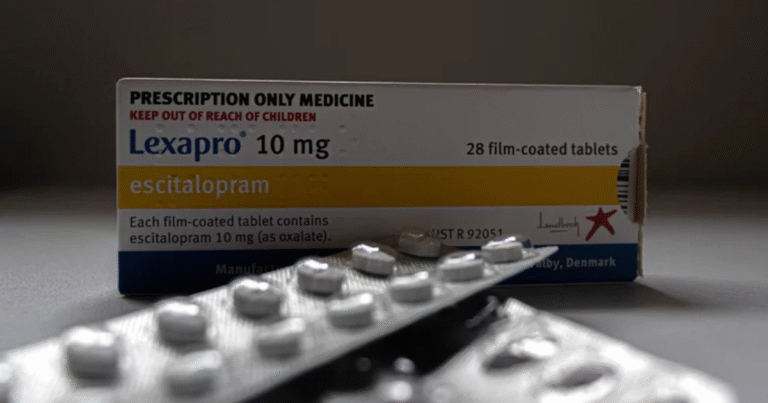
The differential pharmacological management of OCD and GAD reflects the distinct neurobiological substrates of each condition and represents one of the most clinically actionable implications of accurate differential diagnosis. SSRIs are first-line pharmacological agents for both conditions, but the dose ranges that produce therapeutic response differ substantially: GAD typically responds to SSRI doses within the standard therapeutic range — escitalopram 10 to 20 mg, sertraline 50 to 100 mg — while OCD frequently requires doses at or near the maximum approved limits, with sertraline often required at 150 to 200 mg and fluoxetine at 40 to 80 mg daily.
This dose-response difference is not merely a quantitative variation but reflects qualitatively different mechanisms of therapeutic action: SSRI modulation of serotonin transmission in the limbic system and amygdala produces anxiolytic effects at lower concentrations, while the CSTC circuit modulation required for anti-obsessional efficacy requires sustained higher-concentration serotonergic challenge. The clinical implication is that an OCD patient treated at standard anxiety disorder SSRI doses will frequently show insufficient response, and this inadequate response should prompt dose escalation before concluding treatment failure.
FAQ
Can OCD turn into an anxiety disorder?
While OCD vs anxiety involves different neural circuits, they frequently exhibit “diagnostic fluidity” and comorbidity. OCD is no longer classified as an Anxiety Disorder in the DSM-5-TR; however, the physiological distress caused by obsessions triggers a sympathetic nervous system cascade identical to a panic attack. Clinicians often treat the “secondary anxiety” while specifically addressing the “primary obsessive” circuitry.
What is relationship-themed OCD vs relationship anxiety?
Relationship-OCD (ROCD) involves persistent, ego-dystonic doubts about a partner’s suitability, often requiring mental or physical rituals (compulsions) for relief. Relationship anxiety, conversely, is usually a manifestation of Anxious Attachment. Clinical management for ROCD requires specialized Exposure and Response Prevention (ERP), whereas general relationship anxiety typically responds to Interpersonal Psychotherapy (IPT) or Emotionally Focused Therapy (EFT).
Is OCD a disability?
Yes, if the clinical severity results in significant “Social and Occupational Impairment,” OCD is recognized under the Americans with Disabilities Act (ADA) and by the Social Security Administration. Patients meeting the clinical threshold of total functional collapse (e.g., spending 3+ hours daily on rituals) may be eligible for federal support, provided a forensic psychiatric assessment documents the impairment.
Editorial Note
This review was produced by the Anxiety Solve Editorial Collective with the objective of providing a technically rigorous, clinically accurate differential diagnostic framework for OCD and anxiety disorders. The Collective declares no commercial interests in any pharmaceutical products or therapeutic services referenced in this document. All diagnostic criteria are referenced to the DSM-5-TR (APA, 2022) and ICD-11 (WHO, 2022), and all treatment recommendations are referenced to peer-reviewed evidence-based guidelines.
References
American Psychiatric Association. Diagnostic and Statistical Manual of Mental Disorders, Fifth Edition, Text Revision (DSM-5-TR). Washington, D.C.: American Psychiatric Association Publishing; 2022. Codes 300.3 (OCD) and 300.02 (GAD).
World Health Organization. International Classification of Diseases, Eleventh Revision (ICD-11). Codes 6B20 (Obsessive-Compulsive Disorder) and 6B00 (Generalised Anxiety Disorder). Geneva: WHO; 2022. Available at: https://icd.who.int
International OCD Foundation (IOCDF). About OCD: diagnosis and differential diagnosis. Boston: IOCDF; 2023. Available at: https://iocdf.org
Abramowitz, J. S., Taylor, S. y McKay, D. Obsessive-compulsive disorder. The Lancet, 2009; 374(9688): 491–499.
Saxena, S. y Rauch, S. L. Functional neuroimaging and the neuroanatomy of obsessive-compulsive disorder. Psychiatric Clinics of North America, 2000; 23(3): 563–586.
Craske, M. G. et al. Maximizing exposure therapy: an inhibitory learning approach. Behaviour Research and Therapy, 2014; 58: 10–23.
Foa, E. B. et al. Randomized, placebo-controlled trial of exposure and ritual prevention, clomipramine, and their combination in the treatment of obsessive-compulsive disorder. American Journal of Psychiatry, 2005; 162(1): 151–161.
Dugas, M. J. y Robichaud, M. Cognitive-Behavioral Treatment for Generalized Anxiety Disorder: From Science to Practice. New York: Routledge; 2007.
Stein, M. B. y Stein, D. J. Social anxiety disorder. The Lancet, 2008; 371(9618): 1115–1125.
Wells, A. Metacognitive Therapy for Anxiety and Depression. New York: Guilford Press; 2009.
National Institute for Health and Care Excellence (NICE). Obsessive-compulsive disorder and body dysmorphic disorder: treatment. Clinical Guideline CG31. London: NICE; 2005, updated 2019. Available at: https://www.nice.org.uk
Goodman, W. K. et al. The Yale-Brown Obsessive Compulsive Scale: development, use, and reliability. Archives of General Psychiatry, 1989; 46(11): 1006–1011.